
By Mason Brown
The load is permitted, the route is mapped, and the window is set. Then the transport company shows up with equipment that can’t handle the axle weight distribution, and the whole schedule collapses. That scenario plays out more often than it should, and it almost always traces back to a decision made weeks earlier when the buyer didn’t know what questions to ask.
Before you sign a contract or request a quote, there are things about heavy hauling that most vendors won’t volunteer. Here’s what you actually need to understand.
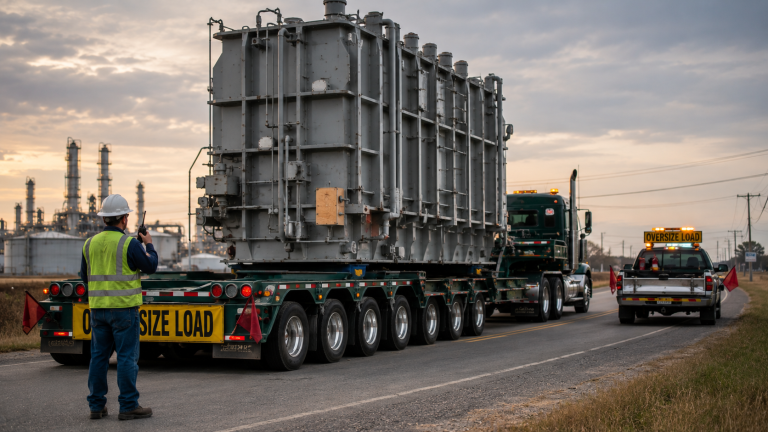
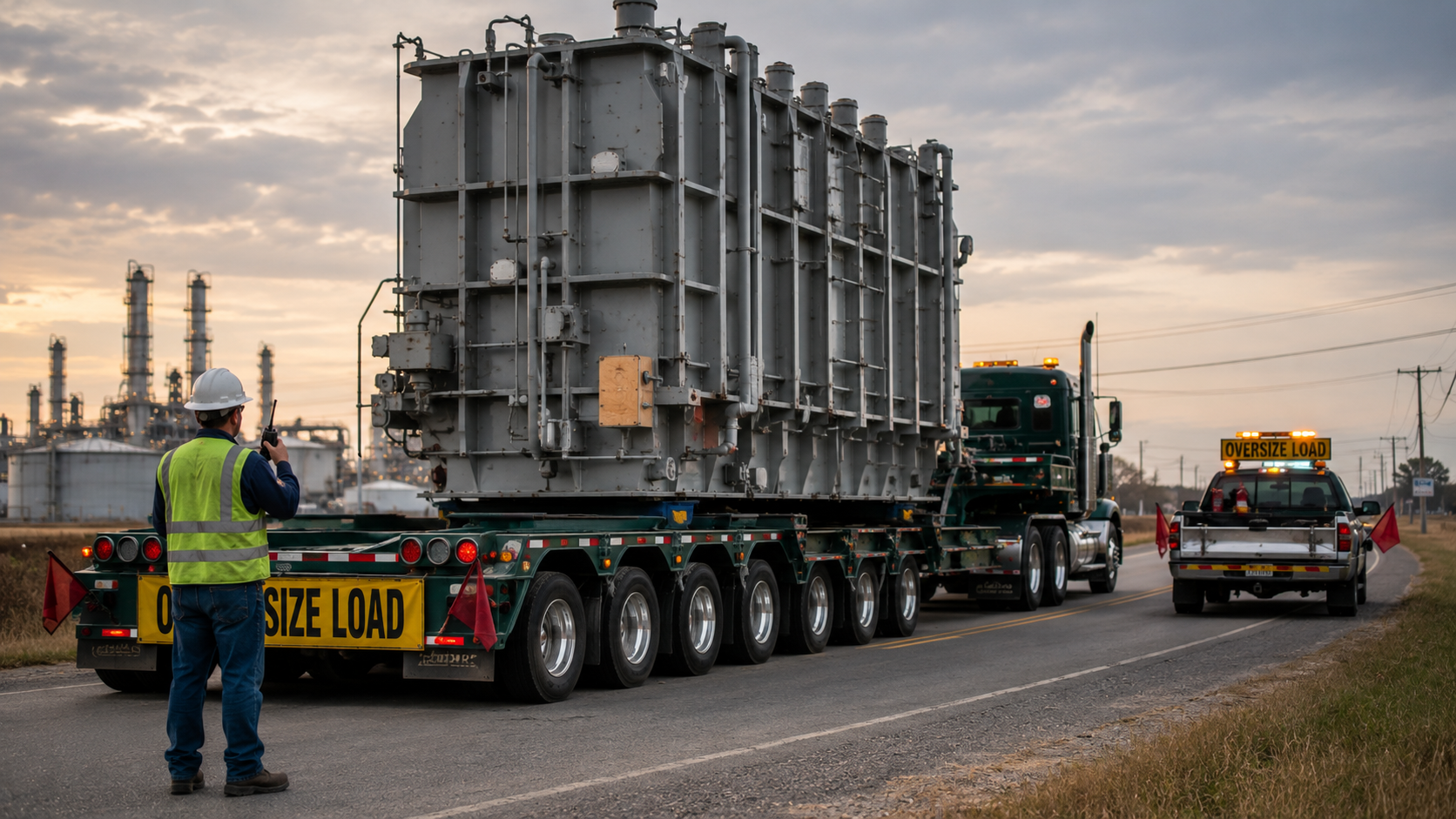
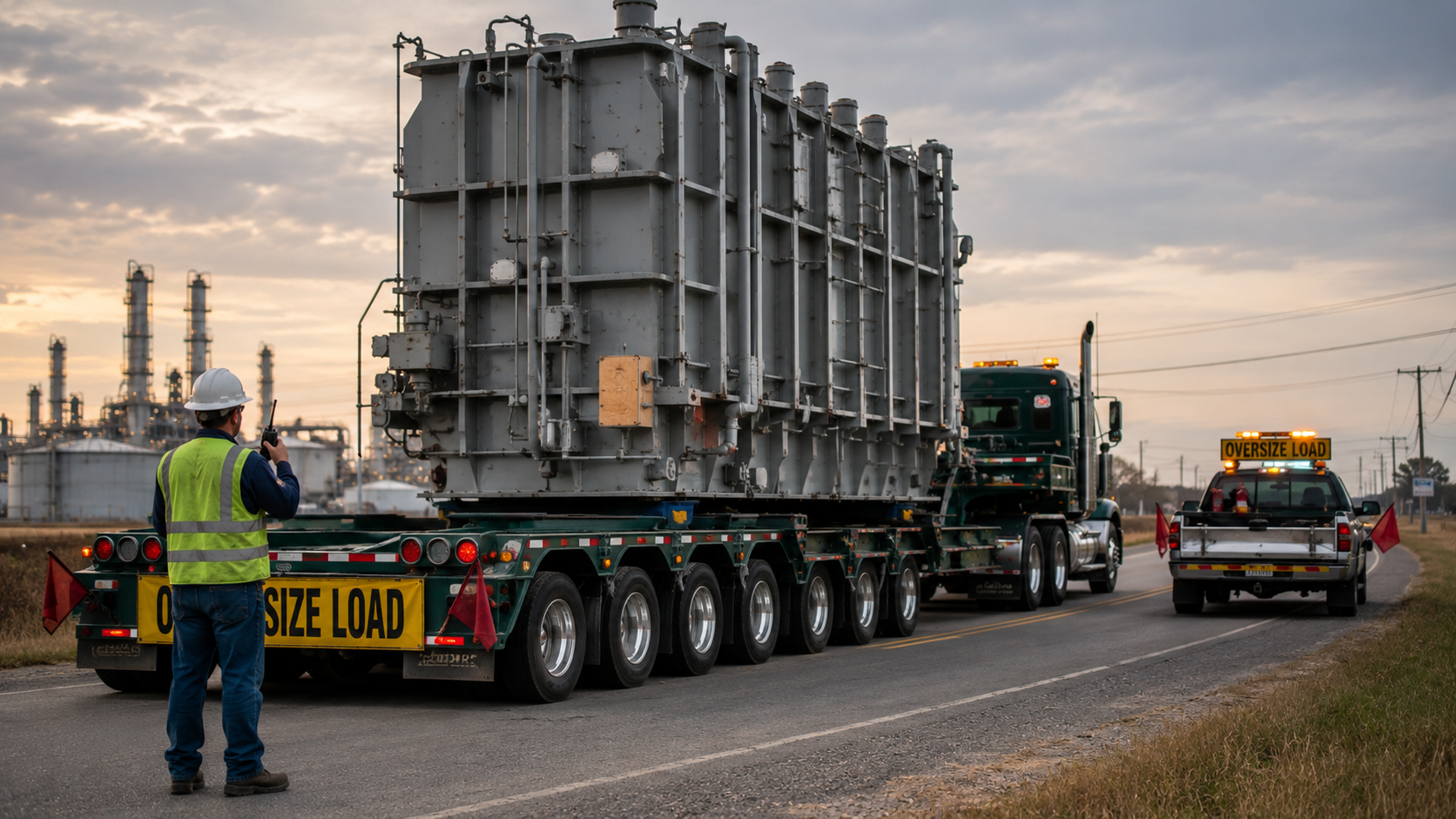
Heavy hauling is the permitted transport of oversized or overweight loads that exceed standard legal limits for width, height, length, or gross vehicle weight. It requires specialized trailers, engineered route surveys, state-by-state permits, pilot vehicles, and trained operators who know how to manage a load that can’t stop quickly, can’t fit in a single lane, and can’t be rerouted on the fly. Getting it right isn’t just logistics. It’s risk management.
Key Takeaways
- Permit requirements vary by state and load type; a single multi-state move can require separate permits from each jurisdiction before the wheels turn
- Equipment selection (lowboy, multi-axle, hydraulic platform) is determined by load dimensions and weight distribution, not just total tonnage
- Pilot vehicle requirements, travel windows, and escort rules differ between Texas, Louisiana, Mississippi, and other Gulf States
- A heavy haul provider without in-house rigging capability creates a coordination gap that adds cost and risk to any lift-and-load operation
- The most expensive heavy haul move is the one that gets stopped at a bridge or state line because the permit package was incomplete
Why Do So Many Heavy Haul Moves Go Wrong Before the Truck Even Leaves?
Most problems in heavy hauling don’t happen on the road. They happen in the planning phase, specifically when the person managing the move doesn’t know enough about the process to catch what the vendor missed.
The permit application process alone involves load dimensions, route surveys, bridge analysis, utility coordination for overhead clearances, and time-of-travel restrictions. Miss one element and the permit gets denied or, worse, issued with errors that get caught at a weigh station three states away.
The planning phase is where the move is either protected or exposed. A vendor who treats permitting as a checkbox rather than an engineering function is a liability, not a service provider.
What Does “Oversized” Actually Mean in Legal Terms, and Why Does It Matter to You?
Oversized load is a legal designation, not a description. Each state defines its own thresholds for what requires a permit, what requires an escort, and what requires a superload designation with additional engineering review.
In Louisiana, for example, loads exceeding certain width or weight thresholds require specific travel windows, mandatory pilot cars, and in some cases law enforcement escorts. Texas has its own dimensional limits and permit tiers. A move that crosses both states requires compliance with both sets of rules simultaneously.
This is why wide load shipping services aren’t just a trucking function. They’re a regulatory navigation function. A provider who operates primarily in one state and occasionally crosses into another is not the same as a provider who runs Gulf State corridors regularly and knows where the friction points are.
Is Your Load Actually Too Big for Conventional Equipment, or Does It Just Seem That Way?
Here’s the contrarian position: most buyers overestimate how unusual their load is and underestimate how much equipment choice matters for loads that are technically within standard ranges.
A 150-ton transformer isn’t unusual in the Gulf Coast petrochemical corridor. What makes it complicated is the combination of weight, fragility, and the specific yard geometry at the receiving facility. The right answer might not be a crane at all. It might be a hydraulic jack and slide system that moves the load precisely without ever lifting it off the ground.
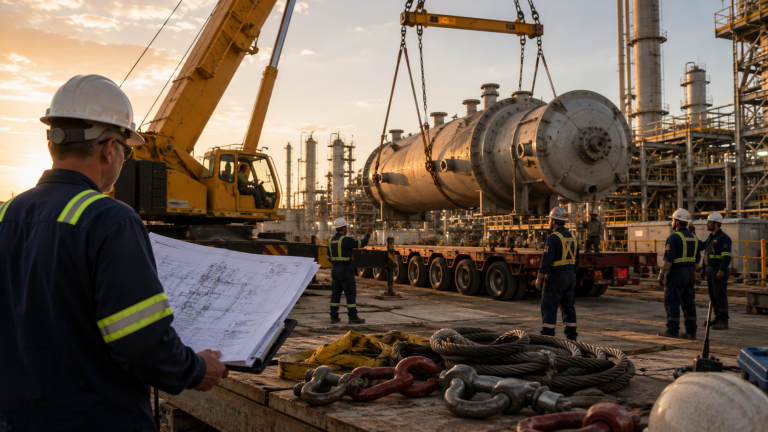
Hydraulic jack and slide systems are a category of rigging solution specifically designed for loads that can’t be lifted conventionally, either because of ceiling height restrictions, floor load limits, or the absence of a suitable crane setup point. They’re not a backup plan. In hard-to-access locations, they’re often the correct first choice.
Consider a common scenario: a refinery needs to replace a large heat exchanger inside a process unit where overhead crane access is blocked by pipe racks. A conventional crane is physically impossible. A hydraulic skidding system moves the load laterally on engineered tracks with millimeter-level control. The move happens on schedule. No crane. No drama.
The Heavy Haul Equipment Decision Framework
The Heavy Haul Equipment Decision Framework is a structured way to match transport equipment to load characteristics before you request a quote, so you’re evaluating vendors on the right criteria from the start.
Use it this way:
Load weight under 80,000 lbs gross, standard dimensions: Standard lowboy or flatbed. Permit requirements are minimal. Focus on driver experience and equipment condition.
Load weight 80,000 to 250,000 lbs, or width over 14 feet: Multi-axle lowboy or hydraulic platform trailer. Permit package becomes complex. Route survey is non-negotiable. Pilot vehicles required in most Gulf States. Understanding pilot vehicles and how they keep over-dimensional hauls safe is essential at this weight and width threshold.
Load weight over 250,000 lbs, or height over 16 feet: Superload designation likely. Engineering review of bridges and overhead structures required. Travel windows may be restricted to nights or weekends. This is where specialized heavy haul equipment and experienced operators aren’t optional, they’re the only way the move happens legally.
Load can’t be lifted at origin or destination: Evaluate hydraulic jacking and sliding as the primary method, not a fallback. The benefits of hydraulic jack and slide systems include precision placement, lower overhead clearance requirements, and the ability to work in confined spaces where cranes can’t operate.
Use this when: you’re in the early planning phase and need to scope equipment before issuing an RFQ.
Not when: the load is already permitted and the vendor is selected. At that point, this is a post-mortem tool.
What Does a Qualified Heavy Haul Provider Actually Look Like Versus One That Just Has Trucks?
The gap between a trucking company that does occasional oversized moves and a dedicated heavy haul operation is significant. It’s not about fleet size. It’s about the depth of in-house capability.
A qualified provider handles permitting in-house rather than outsourcing it to a third-party permit service that’s never seen the route. They own the right trailer configurations rather than renting them last-minute. Their operators have moved loads like yours before, not loads that are vaguely similar.
Brown, Inc. has operated out of Eunice, Louisiana since 1938, running heavy hauling and transportation services across the Gulf States from Texas to Florida. The fleet includes equipment for loads up to 500 tons, and the same crews that haul the load can rig it, lift it, or slide it into place. That matters because the handoff between transport and placement is where most field problems originate.
You can review past heavy haul projects to get a concrete sense of what that looks like in practice.
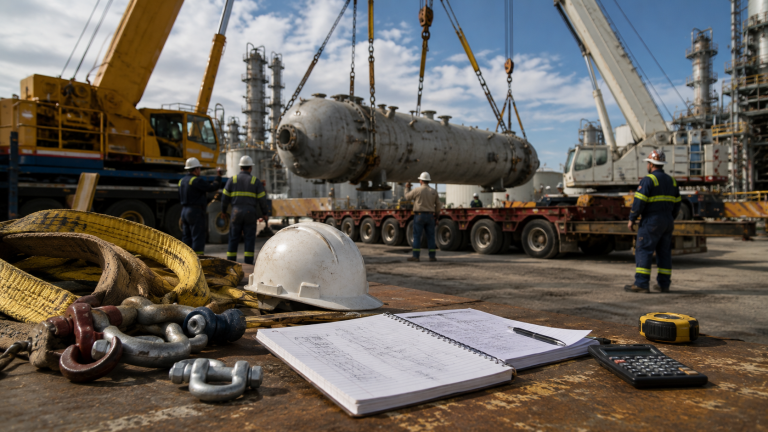
If your move involves both transport and a lift at the destination, a provider with both crane rental and service and heavy hauling capability eliminates the coordination gap between two separate vendors. One call. One plan. One crew that knows what the other is doing.
If your project is at that stage, contact H. Brown, Inc. directly to discuss the specifics before the permit window opens.
Factor | Using an Unqualified or Inexperienced Provider | Using H. Brown, Inc. |
Permit accuracy | Errors caught at weigh stations or state lines | In-house permitting with Gulf State route experience |
Equipment fit | Standard trailer regardless of load geometry | Fleet matched to load dimensions and weight distribution |
Rigging at destination | Separate vendor, separate coordination | Same crew handles haul and placement |
Hard-to-access locations | Load gets to the site; placement is someone else’s problem | Hydraulic jack and slide capability for confined spaces |
Schedule risk | High if any single element is wrong | Lower because planning and execution are integrated |
What Are the Honest Limitations of Heavy Hauling You Should Know Before You Commit?
Heavy hauling is not a solution for every access problem. If the destination site doesn’t have the ground bearing capacity for the load, no amount of transport expertise fixes that. Site preparation has to happen before the truck arrives, not after.
Travel windows for superloads in urban areas are often restricted to very narrow overnight windows. If your project schedule doesn’t accommodate that, the move gets pushed, and the delay compounds. Plan for it early or it will find you late.
Brown, Inc. can move loads across the Gulf States and has done work across the northern US as well. But if your project requires permits in states outside their primary service corridor, the permitting timeline may be longer. Ask about it upfront.
The wrong answer is assuming everything will work out once the equipment shows up. It won’t. The load that arrives at a site without a confirmed placement plan is the load that sits on the trailer for three days while everyone figures out what they should have figured out two weeks earlier.
The load that gets moved safely, on schedule, and placed exactly where it needs to go isn’t the result of luck. It’s the result of a provider who planned the whole move, not just the driving part.
Brown, Inc. has been doing exactly that across the Gulf States since 1938. If you’ve got a load that needs to hook, jack, slide, push, pull, roll, or haul, reach out to the team before the permit window opens. That’s when the planning that protects your schedule actually happens.
About the Author
Mason Brown is part of the team at H. Brown, Inc., a Louisiana-based industrial services company with deep roots in crane rentals, heavy hauling, rigging, and specialized transportation across the Gulf Coast. H. Brown has served the petrochemical, energy, construction, and industrial sectors since 1938, providing complex lifting and transportation solutions for projects of all sizes throughout the Gulf States and beyond.