
By Mason Brown
You’re staring at a piece of equipment that weighs more than most buildings, sitting in a location that wasn’t designed for a crane to get near it, and your project schedule has no room for a second attempt. The decisions made in the next 48 hours will determine whether this lift goes textbook or goes wrong.
Crane service done right isn’t about showing up with the biggest piece of iron you can find. It’s about matching the right equipment, the right rigging configuration, and the right personnel to the exact conditions of your site, your load, and your deadline.
Key Takeaways
- Crane selection depends on four variables: load weight, lift radius, site conditions, and required precision, not just tonnage alone
- A formal lift plan is the difference between a controlled operation and an improvised one, especially on critical lifts
- Hydraulic jacking and slide systems can replace a crane entirely when overhead clearance or site access makes crane work impractical
- Choosing a crane service provider based on equipment capacity alone ignores the variables that cause most lift failures
- H. Brown, Inc. has operated crane and rigging services across the Gulf States since 1938, with a fleet ranging from 10 to 500 tons
What Does a Crane Service Company Actually Do Before the Crane Arrives?
Most of the work happens before anyone turns a key.
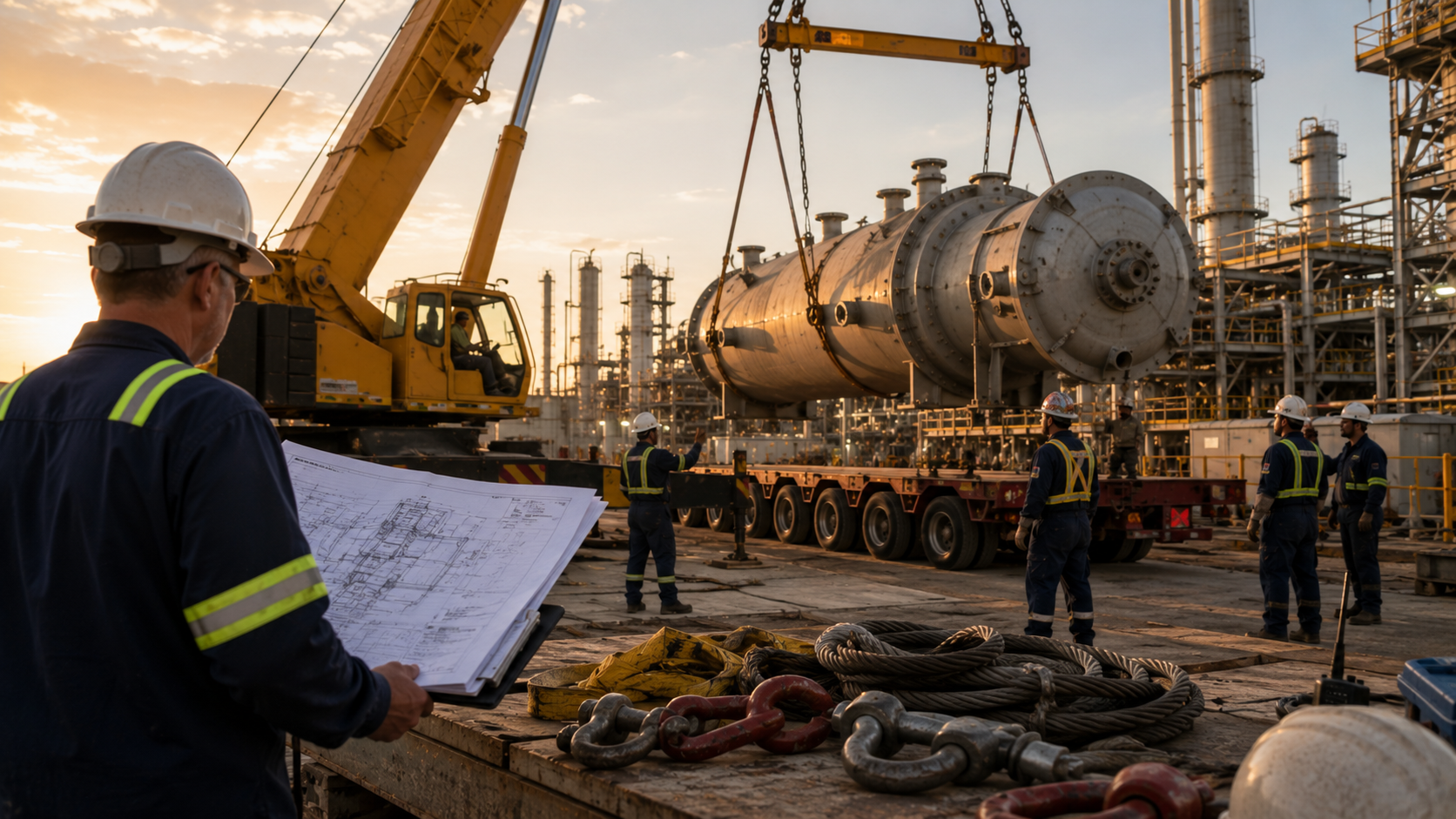
When H. Brown, Inc. takes on a lift, the first stage is a site assessment. That means walking the ground, checking soil bearing capacity, identifying overhead obstructions, measuring access routes, and confirming load specifications against the client’s engineering data. None of that is optional. A crane positioned on soft or unstable ground can tip under load, and no amount of operator skill compensates for a bad setup.
The pre-lift phase is where lift failures are either prevented or made inevitable.
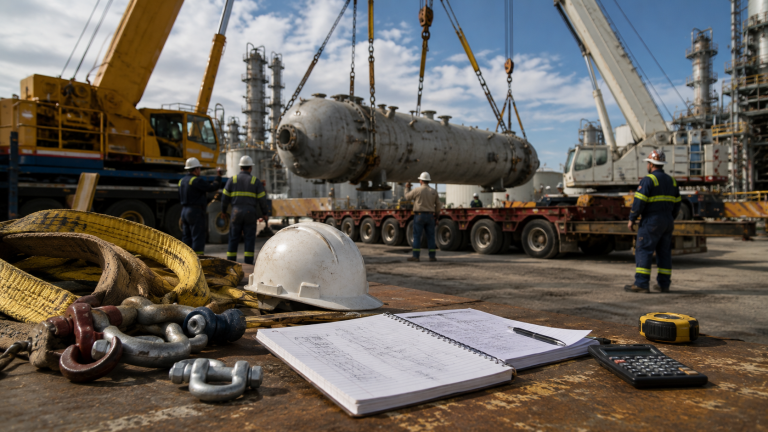
From that assessment, a formal lift plan gets built. A lift plan is a written document that specifies the crane model, boom configuration, load radius, rigging hardware, pick points, swing path, and personnel assignments for a specific lift. For anything classified as a critical lift, that plan requires sign-off before work begins. You can read more about what separates a critical lift from a standard one and why the distinction changes everything about how the job gets planned.
How Do You Choose the Right Crane for the Job?
This is where most project managers get tripped up, and the mistake is almost always the same one.
They spec the crane by load weight alone. A 200-ton load needs a 200-ton crane, right? Not even close. Crane capacity ratings are based on ideal conditions: level ground, minimal radius, specific boom length, no wind. The actual usable capacity on your site, at your required lift radius, with your boom configuration, is almost always lower than the nameplate number.
The four variables that actually drive crane selection are load weight, lift radius (horizontal distance from the crane’s center pin to the load), boom length required to clear obstructions, and ground bearing pressure limits. Change any one of those and you may need a completely different machine.
Brown, Inc. runs a fleet from 10-ton units for confined industrial work up to 500-ton capacity for the heavy lifts common in petrochemical, power generation, and refinery turnaround work. The crane rental and service page covers the fleet in detail, but the honest answer to “which crane do you need” is always: it depends on the full set of site conditions, not the load tag.
Consider a common scenario: a plant engineer needs to set a heat exchanger bundle weighing 85 tons. On paper, a 100-ton crane looks like it has plenty of margin. But if the lift radius is 40 feet because the crane can’t get closer, and the boom has to clear a 60-foot pipe rack, the actual usable capacity at that radius and boom angle may drop the effective lift capacity below what the job requires. That’s not a theoretical concern. That’s how equipment gets damaged and people get hurt.
When Is a Crane Not the Right Tool?
Here’s the contrarian reality: cranes are not always the best answer, even when a crane is what you asked for.
There’s a whole category of industrial moves where overhead clearance doesn’t exist, where the load needs to travel horizontally through a building or under live equipment, or where the access path simply won’t support a crane’s outrigger footprint. In those situations, a crane doesn’t solve your problem. It creates a new one.
Hydraulic jack and slide systems were built for exactly this. A jack and slide system is a ground-level hydraulic lifting and lateral movement system that raises a load on synchronized jacks and then slides it along a track or skid beam, without requiring any overhead clearance at all. For transformer replacements inside substations, large motor swaps in tight pump rooms, or equipment moves inside operating process units, this approach is often faster, safer, and more practical than any crane configuration.
Brown, Inc. uses hydraulic jacking systems specifically for hard-to-access locations where conventional crane work isn’t feasible. The full breakdown of when this method outperforms crane work is covered in the piece on hydraulic jack and slide systems as an alternative to cranes, and the benefits of hydraulic jack and slide systems goes deeper on the mechanics.
The tool you’re most familiar with is not always the tool the job needs.
What Does Rigging Have to Do With Crane Safety?
Everything. The crane is only as safe as the rigging holding the load.
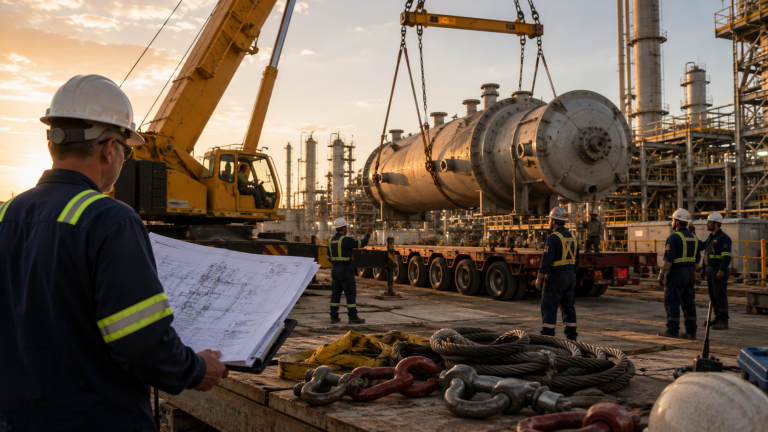
Rigging is the system of slings, shackles, hooks, spreader bars, and hardware that connects the crane hook to the load. A rigging failure at height isn’t a close call. It’s a catastrophe. Rigging selection depends on load weight, center of gravity, pick point geometry, and the load’s structural integrity at the lift points.
Brown, Inc.’s professional heavy lifting and rigging services covers the full scope of what goes into a properly engineered rigging configuration. For utility sector work specifically, the rigging for utilities page addresses the additional compliance requirements that apply to work near energized infrastructure.
Rigging plans for complex lifts, including multi-crane picks, are documented in advance and reviewed by qualified personnel before the lift begins. This isn’t bureaucratic overhead. It’s the mechanism that keeps a lift from becoming an incident report.
How Does H. Brown, Inc. Handle Oversized Load Transportation After the Lift?
A lot of projects don’t end when the crane sets the load. The load still has to get to the site.
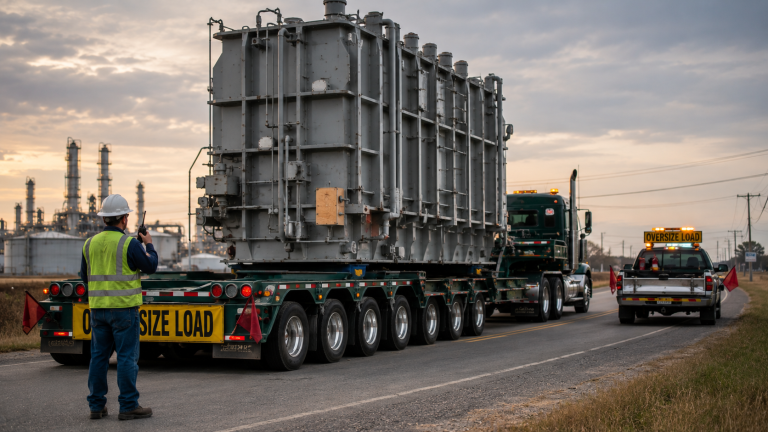
Heavy hauling for oversized and overweight loads requires permitted routes, pilot vehicles, and equipment matched to the load dimensions and weight distribution. H. Brown, Inc. handles the full move, not just the lift at the end of it. That means coordinating wide load shipping services and working with pilot vehicles to keep over-dimensional hauls safe on routes through the Gulf States from Texas to Florida.
For loads that exceed standard lowboy capacity, the company runs dollies and additional axles. The specialized heavy haul equipment page details the transport fleet.
Getting the crane right and the haul wrong means your equipment still doesn’t arrive intact.
Crane Service vs. Going Without Qualified Help: What’s Actually at Risk?
Factor | With H. Brown, Inc. | Without Qualified Help |
Lift plan documentation | Formal plan, signed off before work | Informal or absent |
Equipment match | Sized to actual site conditions | Sized to load tag only |
Rigging configuration | Engineered to load geometry | Field-improvised |
Regulatory compliance | OSHA/ASME standards met | Compliance gaps likely |
Personnel qualification | Trained, insured, experienced | Variable |
Project risk | Controlled, documented | Uncontrolled |
Cost of a failure | Avoided | Equipment damage, injury, liability, delay |
The cost of a qualified crane service is a fixed line item. The cost of a lift gone wrong is open-ended.
If you’re planning a lift in Louisiana, Texas, or anywhere across the Gulf States and you’re still working out the scope, contact H. Brown, Inc. to talk through the site conditions before you commit to an equipment configuration.
What Are the Real Limits of Crane Service?
Crane work isn’t appropriate for every situation, and a company that tells you otherwise isn’t looking out for your project.
Cranes can’t work safely in high wind conditions above established limits. They can’t operate in locations where ground bearing capacity won’t support outrigger loads without engineered matting. They can’t always reach loads inside buildings or below grade without a completely different approach. And no crane can compensate for a load that wasn’t properly engineered for the pick points specified.
Brown, Inc. will tell you when a crane isn’t the right answer. That’s not a sales limitation. That’s what 85 years of doing this work actually looks like.
The jack and slide systems page covers the ground-level alternative for situations where overhead crane access doesn’t exist. And for projects where the challenge is the manufacturing of a precision component that has to fit within the lifted assembly, the CNC machine shop services capability exists in-house, which is a detail most crane companies can’t offer.
When your project can’t afford a second attempt, the methodology behind the lift matters as much as the equipment doing it. H. Brown, Inc. has been doing this work since 1938, across the Gulf States and beyond, for the kinds of projects where getting it right the first time isn’t optional. Reach out to the team to discuss your project scope, your site conditions, and what it takes to put the right equipment and the right personnel on your job.
About the Author
Mason Brown is part of the team at H. Brown, Inc., a Louisiana-based industrial services company specializing in crane rentals, heavy hauling, rigging, and specialized transportation. H. Brown, Inc. has served the Gulf Coast industrial, petrochemical, commercial construction, and energy sectors since 1938, providing complex lifting and transportation solutions for projects of all sizes across the Gulf States and beyond.